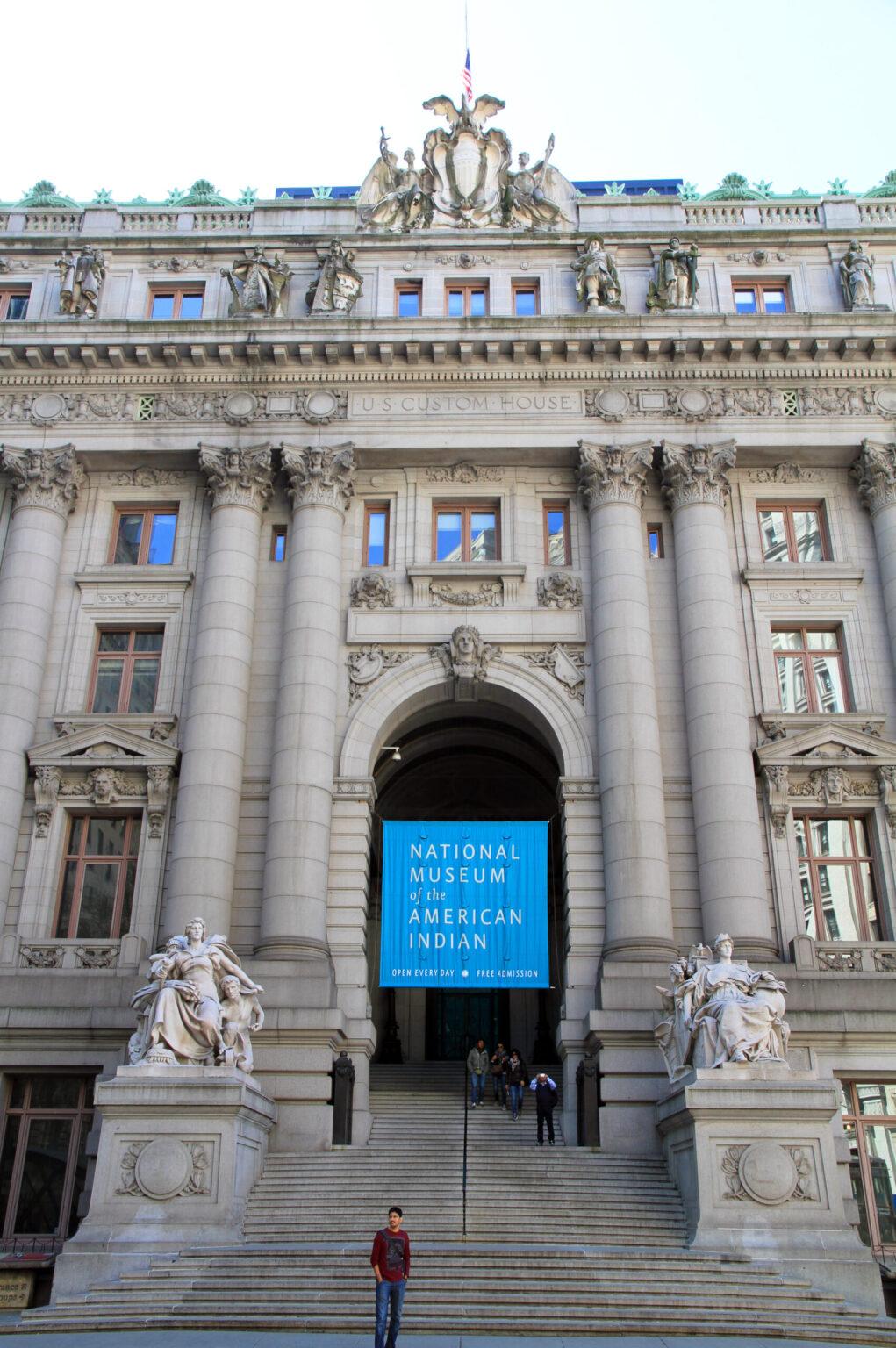
National Museum of the American Indian
The National Museum of the American Indian (George Gustav Heye Center) is much more than just a museum in the heart of Manhattan’s Financial District: it is a fascinating window into the diversity and richness of the native cultures of the Western Hemisphere. Housed in the majestic Alexander Hamilton U.S. Custom House building, this museum offers a unique perspective on the history, life, and art of the indigenous peoples of the Americas. 🏛️
Located at One Bowling Green, right next to Battery Park, the National Museum of the American Indian is an essential stop for anyone interested in history and culture. Whether exploring its permanent exhibitions or enjoying its cultural programs, its unique atmosphere makes it an enriching experience that combines art, history, and a deep connection to the continent’s roots. ✨
Why Visit the National Museum of the American Indian?
Visiting the National Museum of the American Indian means immersing yourself in the vast and vibrant history of the native peoples of the Americas. As part of the Smithsonian Institution, it offers free access to extraordinary collections spanning thousands of years and hundreds of distinct cultures. Indigenous traditions, resilience, and creativity are celebrated here.
Its cultural significance is undeniable: it features artifacts, contemporary art, photographs, and testimonies that challenge stereotypes and promote deeper understanding. Furthermore, the building itself, an architectural gem in the Beaux-Arts style, is a marvel in its own right, with its impressive oval rotunda and historical murals. Its strategic location makes it an ideal starting point for exploring Lower Manhattan.
The museum is also a symbol of recognition and celebration of indigenous cultures in a prominent New York space. It offers an educational and moving experience for visitors of all ages, away from the usual hustle and bustle of the city, in an environment of reflection and learning. If you want to connect with the deep history of the Americas, this is the place. 🌎
How to Get to the National Museum of the American Indian by Subway?
Main Stations
The main stations providing direct or very close access to the National Museum of the American Indian are Bowling Green and Whitehall St, located right next to the museum at the southern tip of Manhattan. These stations connect several subway lines and facilitate access from different parts of the city. 🚇
Subway Lines to the National Museum of the American Indian
The museum is very well connected by the New York City subway. The lines that take you directly to the nearest stations are:
- 4, 5 (Green lines) – Bowling Green Station
- R, W (Yellow lines) – Whitehall St Station
- 1 (Red line) – South Ferry Station (a few minutes’ walk)
- J, Z (Brown lines) – Broad St Station (a few minutes’ walk)
How to Get to the National Museum of the American Indian from:
Central Park / Columbus Circle
If you are near Central Park or Columbus Circle, you can take the 1 line (Red) southbound to the South Ferry station, or the R or W lines (Yellow) southbound to Whitehall St. Another option is to take the 4 or 5 line (Green) from the Grand Central or Union Square area to Bowling Green.
Midtown Manhattan (Times Square / Penn Station)
From Times Square, you can take the R or W lines (Yellow) directly south to Whitehall St. From Penn Station, take the 1 line (Red) south to South Ferry.
Brooklyn (DUMBO / Williamsburg)
From DUMBO, you can take the F train to Jay St-MetroTech and transfer to the R train towards Manhattan, getting off at Whitehall St. From Williamsburg, take the L train to Union Square and transfer to the 4 or 5 lines (Green) southbound to Bowling Green.
Queens (Long Island City / Flushing)
If you are coming from Long Island City or Flushing in Queens, you can take the 7 train to Grand Central and transfer to the 4 or 5 lines (Green) southbound to Bowling Green.
Harlem
From Harlem, you can take the 4 or 5 lines (Green) directly south to the Bowling Green station.
Airports (JFK / LaGuardia / Newark)
From JFK Airport, take the AirTrain to Howard Beach and transfer to the A line (Blue) to Fulton St, then switch to the 4 or 5 line (Green) to Bowling Green. From LaGuardia, take a bus (like the Q70-SBS) to Jackson Hts-Roosevelt Av and transfer to the R line (Yellow) to Whitehall St. From Newark, take NJ Transit to Penn Station and then the 1 line (Red) to South Ferry or the R/W lines to Whitehall St from Times Sq-42 St.
What to Do at the National Museum of the American Indian?
The National Museum of the American Indian is one of New York’s cultural treasures, offering a deep dive into the lives and art of native peoples. It provides a variety of experiences that will connect you with fascinating stories in a stunning architectural setting. Detailed exhibitions, cultural programs, and the beauty of the building make every visit special. 🖼️
Explore Permanent and Temporary Exhibitions
The museum houses impressive collections. The permanent exhibition “Infinity of Nations” showcases cultural diversity through over 700 objects from indigenous peoples across the continent. There are also temporary exhibitions addressing specific themes, contemporary native art, and historical events. Take time to explore the various galleries. 🏺
Admire the Building’s Architecture
The museum is located in the Alexander Hamilton U.S. Custom House, an architectural masterpiece designed by Cass Gilbert. Don’t miss the spectacular central rotunda with its elaborate murals by Reginald Marsh depicting the port of New York. Stroll through its corridors and admire the building’s ornamental details. ✨
Attend Cultural Events and Programs
The museum offers rich, free cultural programming throughout the year, including native music and dance festivals, film screenings, talks with artists and scholars, and family workshops. Check the event calendar before your visit to take advantage of these unique opportunities. 🎶💃
Visit the Museum Shop
The museum shop offers a curated selection of books, jewelry, crafts, and authentic gifts from indigenous artists and communities across the Americas. It’s an excellent place to find unique souvenirs and directly support native creators. 🛍️
Reflect and Learn in a Quiet Space
Unlike other bustling tourist spots, the museum offers a calm and reflective atmosphere. It is an ideal place to learn about the history and continued vitality of indigenous cultures, fostering respect and understanding. Take your time to absorb the information and stories presented. 🤔
Attractions Near the National Museum of the American Indian
The National Museum of the American Indian is located in a historic and vibrant area of Lower Manhattan. If you decide to explore the surroundings after your museum visit, you will find a wide variety of interesting and iconic places within walking distance. 🚶♀️🚶♂️
Battery Park
Right across from the museum lies Battery Park, a beautiful waterfront park with spectacular views of the Statue of Liberty and the New York Harbor. It’s perfect for strolling, relaxing, and enjoying the outdoors. You’ll also find monuments here like the East Coast Memorial. 🌳
Ferry to the Statue of Liberty and Ellis Island
The ferries that take you to the Statue of Liberty and Ellis Island depart from Battery Park, very close to the museum. If you plan to visit these iconic landmarks, the museum’s location is ideal for combining both experiences in one day. 🗽⛴️
Wall Street and the Financial District
Just a few steps north, you’ll enter the heart of the Financial District. You can see the famous Wall Street, the New York Stock Exchange, and Federal Hall, where George Washington was inaugurated as president.
Charging Bull and Fearless Girl
Near Bowling Green, you’ll find the iconic Charging Bull sculpture (Wall Street Bull), a symbol of financial power and a popular photo spot. Not far away, you can often find the Fearless Girl statue. 🐂👧
Fraunces Tavern Museum
Within walking distance is Fraunces Tavern, one of Manhattan’s oldest buildings, housing a museum and restaurant. It’s famous because George Washington bid farewell to his officers here at the end of the Revolutionary War. 📜
Staten Island Ferry Terminal
Also very close is the Staten Island Ferry terminal. You can take this free ferry to enjoy fantastic views of the Lower Manhattan skyline, the Statue of Liberty, and the harbor. A highly recommended ride! 🚢
Tips for Visiting the National Museum of the American Indian
Although visiting the National Museum of the American Indian is a culturally enriching and generally calm experience, there are a few things you can keep in mind to make the most of your visit and enjoy everything this unique museum has to offer. 💡
Best Time of Day to Go
The museum is usually less crowded on weekday mornings. If you prefer a quieter visit, try to go shortly after opening (typically 10:00 AM). Weekends and holidays may attract more visitors, although the museum’s ample space allows for comfortable movement. Remember that admission is free. 😊
Avoiding Crowds
While it doesn’t typically experience the massive crowds of other New York museums, special events or free admission days (which is every day) might draw more people. If there’s a scheduled event you’re interested in, arrive a bit early. The galleries are spacious, so you’ll rarely feel overwhelmed.
Security
The museum has standard security checks at the entrance, similar to other federal buildings and Smithsonian museums. The area is generally safe, but like any tourist spot in New York, keep an eye on your belongings, especially in outdoor areas like Battery Park or near subway stations.
What to Bring and What Not To
Comfortable shoes are advisable, as you’ll likely do a lot of walking inside the museum and around the area. A camera is a good idea to capture the beauty of the building and some exhibits (check the photography policy). Although admission is free, you can bring a water bottle. Consider a light jacket, as the air conditioning can be strong. Food and drinks are not allowed inside the galleries. Enjoy the visit and the learning experience. 👍